October 24, 2026
How can bio-based innovations become not only environmentally sustainable, but also socially responsible and economically viable?
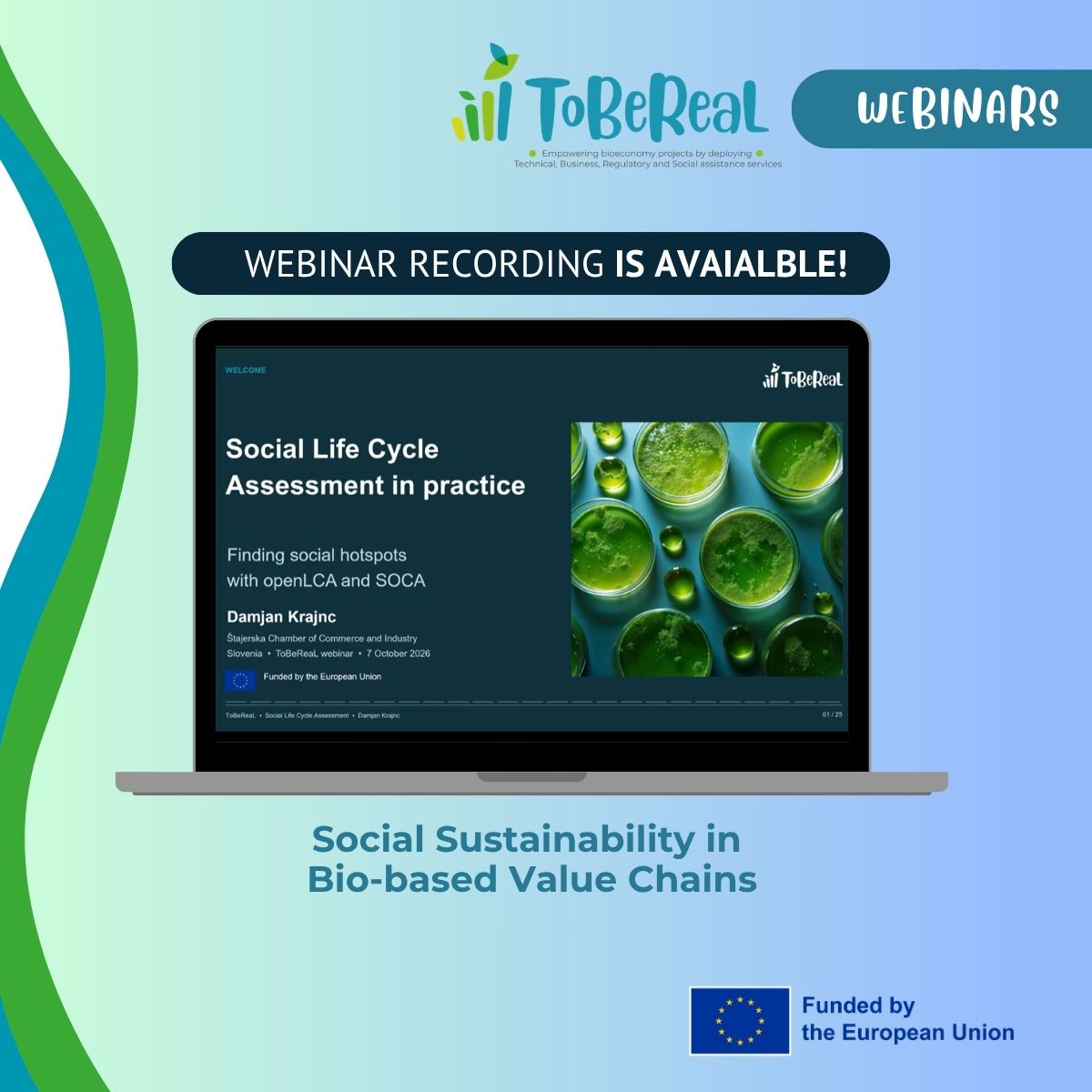
This was the central question addressed during the ToBeReal webinar, Social Sustainability in Bio-Based Value Chains, held on 7 October 2026.
The webinar was jointly organised by project partners CluBE (Cluster of Bioeconomy and Environment of Western Macedonia), the Chamber of Commerce and Industry of Štajerska (ŠGZ), and EV ILVO (Flanders Research Institute for Agriculture, Fisheries and Food), with the objective to explore practical tools and methodologies for integrating social sustainability into bio-based innovation and business development.
While environmental performance often takes centre stage in discussions related to the bioeconomy, the equally important social implications remain less visible. It’s true that bio-based innovations can create new opportunities for businesses and communities, but they may also introduce social risks, affect working conditions or require significant organisational changes. To address these challenges, the 6th ToBeReaL webinar presented three complementary approaches that help businesses identify social risks, assess their readiness for innovation and adapt their business models to support sustainable transitions.
Identifying social risks through Social Life Cycle Assessment (S-LCA)
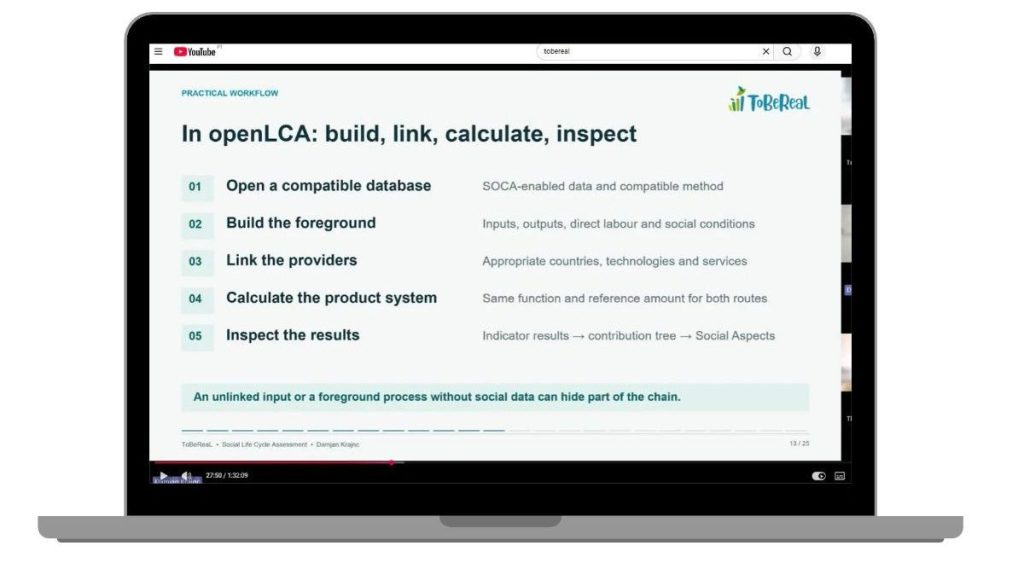
In the first presentation, Damjan Krajnc, from the Chamber of Commerce and Industry of Štajerska, introduced Social Life Cycle Assessment (s-LCA) as a methodology for identifying potential social risks across product life cycles.
Through a practical example involving the conversion of food residues into animal feed ingredients, the presentation demonstrated how openLCA and the SOCA database can support the identification of social hotspots in bio-based value chains.
Furthemore, the session emphasised the importance of considering workers, local communities and other stakeholders when evaluating sustainability, while recognising that social risk screening is a starting point for further investigation rather than a definitive assessment of company practices.
By comparing conventional and circular approaches to managing food residues, it was illustrated how changes in production processes and supply chains can influence different social risk indicators.
Watch the entire presentation to learn more.
Assessing innovation readiness through a systemic approach
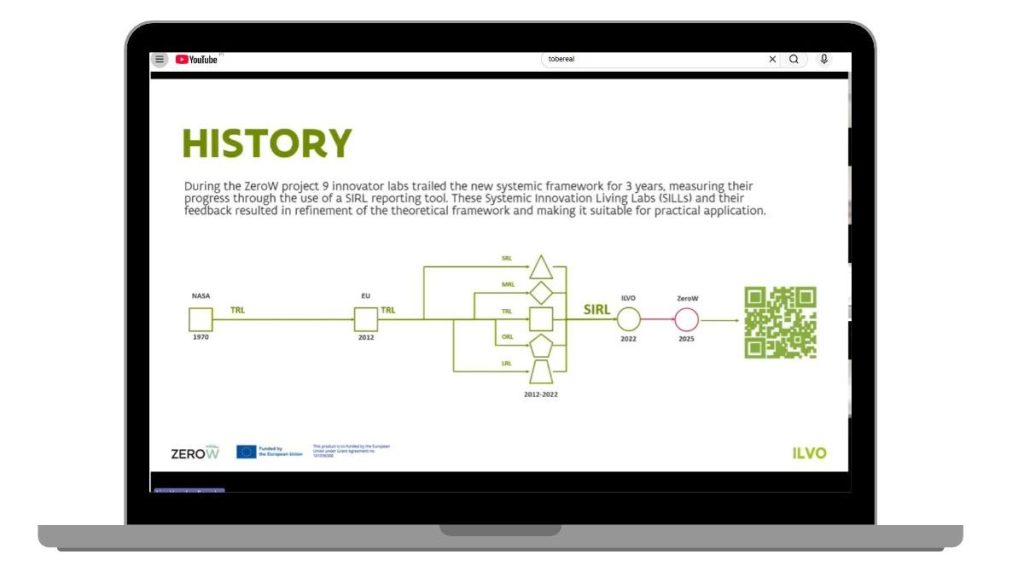
The second presentation, delivered by Lisa Van den Bossche from EV ILVO, focused on the Systemic Innovation Readiness Level (SIRL) framework, a tool designed to help organisations evaluate and monitor the progress of innovation beyond the technological development.
Although traditional Technology Readiness Levels (TRLs) primarily focus on technical maturity, effective innovation also depends on broader conditions, such as market acceptance, stakeholder behaviour, governance, and organisational capacity. The SIRL framework addresses these interconnected factors through its five main dimensions: technology, behaviour, governance, business, and organisation.
In addition, the framework considers five stages of innovation development, from the initial emergence of an idea to its wider acceptance and integration into established practices. Through a collaborative process, project teams and relevant stakeholders define indicators to monitor progress across these stages. This helps to identify bottlenecks, assess whether different aspects of an innovation are advancing together, and determine where additional efforts may be required.
The SIRL framework therefore encourages businesses and innovation teams to move beyond a purely technological perspective and adopt a more integrated approach to innovation management, supporting more effective planning, collaboration and decision-making.
Watch the entire presentation to learn more.
Supporting business model change though HABC framework
The third presentation, delivered by Liselot Bourgeois from EV ILVO, explored how businesses can adapt their business models to successfully implement new ideas and respond to changing market and societal conditions.
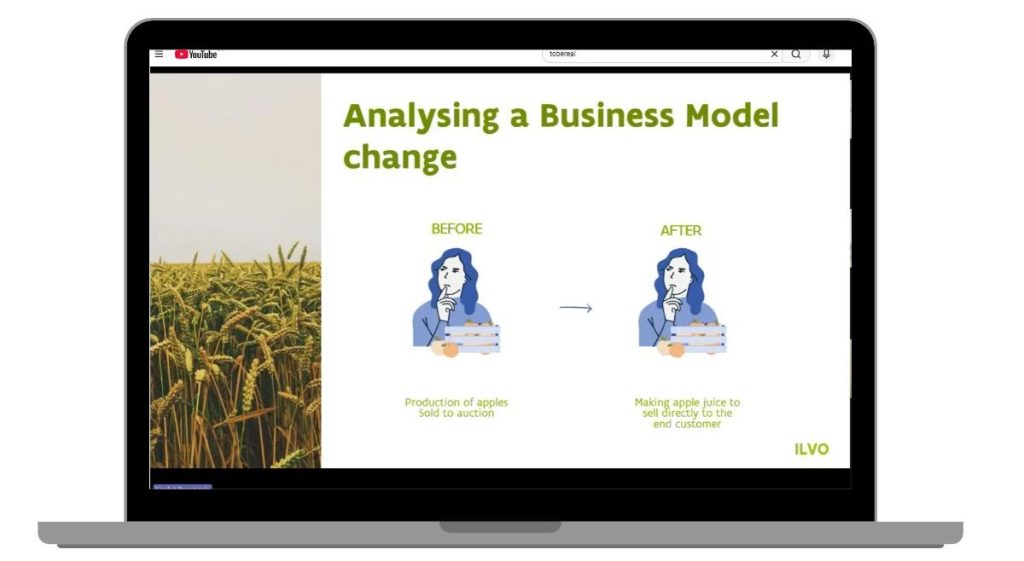
The presentation introduced the Holistic Analysis of Business Model Change (HABC) framework. This approach examines business model transformation by considering not only a company’s internal characteristics, but also its wider industry and external environment. The framework analyses the influence of various factors on business model change, including the drivers of transformation, elements that facilitate or hinder progress, and the specific operating circumstances of a business.
To demonstrate its practical application, Liselot presented a case study conducted as part of the ToBeReal project. Using a combination of interviews, business model analysis, and strategic reflection, the HABC framework identified the company’s strengths and weaknesses, as well as any potential challenges and information gaps associated with its future ambitions.
The analysis revealed an important distinction: having a strong mission and innovative ideas does not automatically result in a financially viable or investment-ready business model. Businesses also need to clearly define how they create and capture value, which activities are essential to their strategy, and what resources, partnerships and organisational changes are required to support future growth.
Rather than providing a predefined solution, the HABC framework supports companies in asking the right questions, identifying critical assumptions and developing a clearer pathway from their current business model towards their future ambitions.
Watch the entire presentation to learn more.
Supporting sustainable innovation through ToBeReal
Through tailored services, expert guidance and mentoring, the ToBeReal project supports bio-based businesses and innovators in addressing the challenges associated with developing and implementing sustainable solutions. By bringing together social, technological, organisational and economic perspectives, ToBeReal aims to support the transition towards more responsible, resilient and viable bio-based value chains.
Interested in learning more? Watch the full recording of the ToBeReal webinar, and discover practical tools and insights.